Search
Enter Keywords:
Tuesday, 07 September 2010
Home arrow Papers on arrow About CA arrow Conservation Agriculture: What Is It and Why Is It Important for Future Sustainable Food Production?
Conservation Agriculture: What Is It and Why Is It Important for Future Sustainable Food Production? Print E-mail
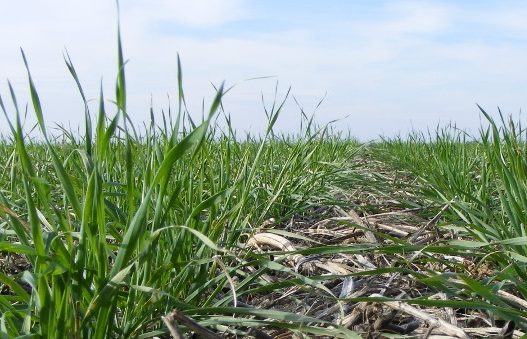
This paper focuses on conservation agriculture (CA), defined as minimal soil disturbance (no-till) and permanent soil cover (mulch) combined with rotations, as a more sustainable cultivation system for the future. The paper first introduces the reasons for tillage in agriculture and discusses how this age-old agricultural practice is responsible for natural resource and soil degradation. The paper goes on to introduce conservation tillage (CT), a practice that was borne out of the American dust bowl of the 1930s, before comparing CT with CA, a suggested improvement on CT, where no-till, mulch, and rotations significantly improve soil properties (physical, biological, and chemical), and other biotic factors, and enables more efficient use of natural resources. Recent data is presented showing how CA can improve agriculture through improvement in water infiltration and reduced erosion, improved soil surface aggregates, reduced compaction through promotion of biological tillage, increased surface soil organic matter and carbon content, moderated soil temperatures, and weed suppression. CA also helps reduce costs of production, saves time, increases yield through timelier planting, reduces diseases and pests through stimulation of biological diversity, and reduces greenhouse gas emissions. Availability of suitable equipment is a major constraint to successful CA, but advances in design and manufacture of seed drills by local manufacturers is enabling farmers to experiment and accept this technology in many parts of the world. Estimates of farmer adoption of CA are close to 100 million hectares in 2005, indicating that farmers are convinced of the benefits of this technology. The paper concludes that agriculture in the next decade will have to sustainably produce more food from less land through more efficient use of natural resources and with minimal impact on the environment in order to meet growing population demands. This will be a tall order for agricultural scientists, extension personnel, and farmers. Promoting and adopting CA management systems can help meet this complex goal.


Documents:
CA What Is It and Why Is It Important for Future Sustainable Food Production.pdf
< Prev

Copyright 2000 - 2005 Miro International Pty Ltd. All rights reserved.
Mambo is Free Software released under the GNU/GPL License.
Customized by XUL